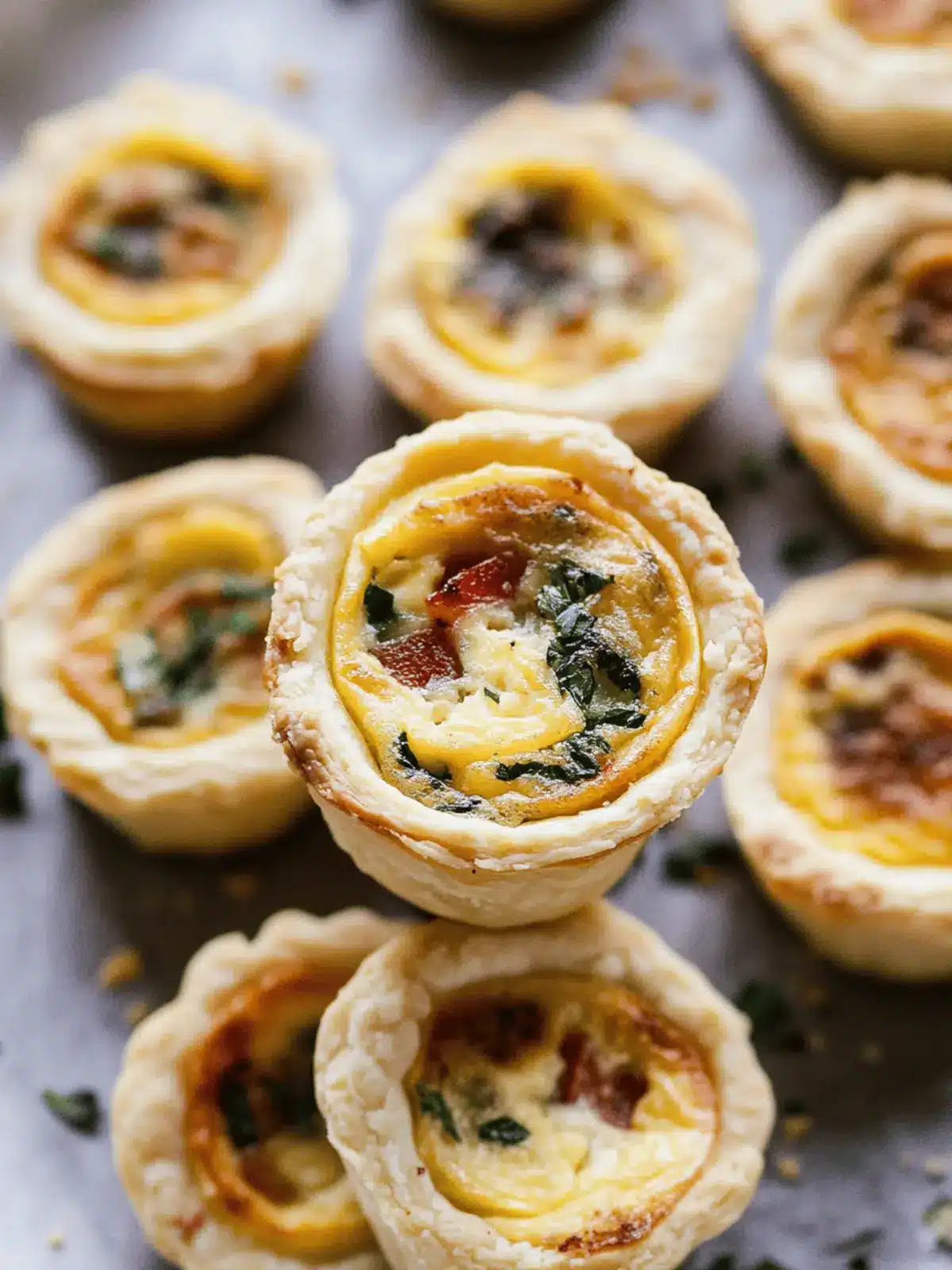
There’s an undeniable charm to bite-sized food, a little parcel of delight that promises flavor and convenience in every mouthful. Among these culinary treasures, the mini quiche stands out as a true superstar. Warm, flaky, and brimming with creamy, savory goodness, these diminutive delights are more than just appetizers; they're an invitation to effortless entertaining, smart meal prep, and delightful dining. If you’ve been searching for the ultimate mini quiche recipe, prepare for your brunch table, party spread, or weekly meal plan to get a significant upgrade.
These mini marvels are celebrated for their endless customizability, surprising ease of preparation, and remarkable versatility. Whether you're envisioning a sophisticated Sunday brunch, an elegant bridal shower, a fuss-free breakfast, or a packed lunch that actually excites, a reliable mini quiche recipe is your secret weapon. From vegetarian-friendly spinach and feta to smoky ham and cheddar, or rich mushroom and Swiss, the flavor combinations are as limitless as your imagination. You can even opt for a crustless version for a low-carb twist or prepare them well in advance to simplify your busiest mornings.
Even better, mini quiches are champions of make-ahead magic. They freeze beautifully and reheat in mere minutes, making them a true lifesaver for busy families, gracious brunch hosts, and diligent meal preppers alike. This comprehensive guide will walk you through mastering the art of the mini quiche, offering pro tips, smart storage advice, and a plethora of tasty variations to fit every palate and dietary need. So, grab your muffin tin—it’s time to unlock the full potential of a mini quiche recipe that fits any flavor and every occasion!
What Makes Mini Quiches a Culinary Marvel?
At its heart, a mini quiche is a scaled-down, more convenient rendition of the classic French quiche—essentially a savory egg custard baked within a delicate pastry crust. But don't let their small stature fool you. These bite-sized wonders pack all the robust flavor of their full-sized counterparts, offering a unique blend of elegance and practicality that makes them incredibly popular for a myriad of occasions.
The core appeal of a great mini quiche recipe lies in its remarkable versatility. Unlike its larger sibling, which often requires a fork and plate, mini quiches are designed for easy handling, making them ideal for passed appetizers, buffet lines, or on-the-go meals. They can be crafted with a buttery, flaky pie crust for that traditional, satisfying bite, or made entirely without a crust for a lighter, low-carb, and gluten-free friendly option. The fillings are equally flexible, inviting creativity with ingredients like gooey melted cheese, vibrant sautéed vegetables, crispy bacon, savory sausage, or fresh, aromatic herbs. You can effortlessly mix and match ingredients based on seasonal availability, your guests' dietary preferences, or simply whatever delicious items you have on hand in your fridge.
While often compared to other egg-based dishes, mini quiches hold their own distinct advantages:
- Vs. Frittatas: Frittatas are typically crustless and baked in larger, often oven-safe skillets. Mini quiches, by contrast, boast that irresistible crust-to-filling ratio, providing a textural contrast that frittatas lack.
- Vs. Omelets: Omelets are usually prepared individually and served immediately, making them less practical for feeding a crowd. A single mini quiche recipe, however, can yield dozens of perfect portions, making them ideal for large gatherings or batch cooking.
- Vs. Full-Sized Quiches: While equally delicious, a full-sized quiche requires slicing and serving, which can be messy and less convenient for standing events. Mini quiches offer individual portions, eliminating the need for extra utensils and simplifying portion control.
Whether you're gearing up for an elaborate brunch buffet or seeking a freezer-friendly breakfast that feels gourmet, these little bites deliver sophisticated flavor with minimal fuss, transforming everyday ingredients into something truly special.
Crafting Your Perfect Mini Quiche Recipe: Beyond the Basics
The beauty of a mini quiche recipe is its adaptability. While the basic concept remains the same, the details allow for endless personalization. Let’s delve into the key components and how to elevate each one for truly spectacular results.
The Foundation: Crust Options
The crust is more than just a holder; it's an integral part of the mini quiche experience. A flaky, golden crust provides a delightful textural contrast to the creamy filling.
- Homemade Pie Dough: For the ultimate flavor and texture, a homemade all-butter pie crust is unbeatable. It offers a rich, delicate flakiness that elevates the entire dish. Roll it thin and use a round cutter to fit your mini muffin tin.
- Store-Bought Pie Dough: When time is of the essence, quality store-bought pie crusts are an excellent shortcut. They save significant prep time without sacrificing too much on taste or texture. Look for brands made with real butter for the best results.
- Puff Pastry: For a different kind of flaky indulgence, puff pastry squares can be pressed into the muffin tin. They puff up beautifully, creating a light, airy shell.
- Crustless: For those following a low-carb or gluten-free diet, simply omit the crust. Lightly grease your muffin tin cups or use silicone liners. While technically more akin to a mini frittata, the rich custard base still makes for a satisfying bite.
Pro Tip for Crusts: To prevent a soggy bottom, especially with homemade crusts, consider blind baking your pastry shells for 5-7 minutes before adding the filling. This partially cooks the crust, creating a barrier against moisture from the custard.
The Heart: Silky Egg Custard
The egg custard is the soul of your mini quiche recipe. Achieving a silky, rich, and perfectly set filling is key. The basic ratio is typically eggs, dairy, and seasonings.
- Eggs: Use fresh, large eggs. Whisk them well, but don't over-whisk to avoid too many air bubbles, which can lead to a less dense texture.
- Dairy: The choice of dairy significantly impacts the custard's richness.
- Milk (whole): Lighter, still creamy.
- Half-and-Half: A good balance of creaminess without being overly rich.
- Heavy Cream: For an ultra-luxurious, decadent custard.
- Dairy-Free Milk: Unsweetened almond or cashew milk can be used for dairy-free versions, though the texture might be slightly different.
- Seasoning: Salt and freshly ground black pepper are essential. A pinch of nutmeg is a classic addition to quiche, enhancing its savory depth. Onion powder, garlic powder, or a dash of hot sauce can also add complexity.
The Flavor: Creative Fillings & Add-ins
This is where your mini quiche recipe truly shines. The possibilities are endless!
- Classic Combos:
- Ham & Swiss/Cheddar: Diced cooked ham and shredded Gruyere or sharp cheddar.
- Spinach & Feta: Thawed, squeezed-dry spinach and crumbled feta cheese. Sautéed onions or shallots can be a great addition.
- Mushroom & Swiss: Sautéed mushrooms (button, cremini, or mixed wild mushrooms) with shredded Swiss cheese.
- Gourmet & Sophisticated:
- Smoked Salmon & Dill: Flaked smoked salmon, fresh dill, and a touch of cream cheese or goat cheese.
- Goat Cheese & Caramelized Onion: Sweet caramelized onions with tangy goat cheese.
- Asparagus & Prosciutto: Blanched asparagus tips and crispy prosciutto bits.
- Hearty & Savory:
- Bacon & Gruyere: Crispy crumbled bacon and nutty Gruyere cheese.
- Sausage & Pepper Jack: Crumbled cooked sausage (breakfast or Italian) with spicy pepper jack cheese.
- Roasted Red Pepper & Goat Cheese: Diced roasted red peppers and tangy goat cheese.
- Vegetarian Wonders:
- Broccoli & Cheddar: Steamed and finely chopped broccoli florets with sharp cheddar.
- Sundried Tomato & Basil: Chopped sundried tomatoes (oil-packed, drained) and fresh basil.
- Mixed Veggie: A colorful medley of finely diced bell peppers, zucchini, and corn.
Important Filling Tips:
- Pre-cook & Drain: Always pre-cook ingredients like bacon, sausage, and most vegetables. Ensure they are thoroughly drained of any excess moisture to prevent a watery or soggy quiche.
- Dice Small: Chop all your fillings into small, even pieces so they distribute well within the mini quiches and cook through evenly.
- Don't Overfill: Aim for about 1-2 tablespoons of solid fillings per crust before pouring in the custard. Too much filling can prevent the custard from setting properly.
The Art of Make-Ahead & Freezing Your Mini Quiches
The "make-ahead" aspect is where the mini quiche truly shines, offering unparalleled convenience for any occasion. Mastering the preparation, storage, and reheating will make these savory bites a regular feature in your culinary repertoire.
Pre-Baking Preparation
You can prepare elements of your mini quiches in advance to streamline the baking process:
- Fillings: Chop and pre-cook all your vegetables, meats, or other additions a day or two before. Store them separately in airtight containers in the refrigerator.
- Crusts: If using homemade pie dough, you can prepare the dough and chill it, or even roll out and cut the circles, placing them in the muffin tins and chilling them, covered, until ready to fill. For store-bought crusts, simply unroll when ready.
- Custard: Whisk together your eggs, dairy, and seasonings. Store the mixture in an airtight container in the fridge for up to 24 hours. Give it a quick whisk again before pouring.
When ready to bake, simply assemble the pre-prepped fillings into the crusts, pour in the custard, and bake!
Baking for Perfection
Baking mini quiches typically involves a moderate oven temperature (around 350-375°F or 175-190°C) for 20-30 minutes, depending on your oven and the size of your muffin tin. Look for the following cues:
- The crust should be golden brown.
- The filling should be set; a gentle shake of the muffin tin should show no liquid jiggle in the center. A knife inserted near the center should come out clean.
- Some slight puffing of the custard is normal, but it will settle as it cools.
Allow the mini quiches to cool slightly in the muffin tin before gently removing them with a thin knife or offset spatula. This prevents sticking and helps them hold their shape.
Storage & Reheating for Maximum Convenience
This is where the mini quiche recipe becomes a true game-changer for meal prep and entertaining.
- Refrigeration (Baked): Fully baked mini quiches can be stored in an airtight container in the refrigerator for up to 3-4 days. Allow them to cool completely before storing to prevent condensation.
- Freezing (Baked): Mini quiches freeze exceptionally well.
- Allow baked quiches to cool completely.
- Arrange them in a single layer on a baking sheet and flash freeze for 1-2 hours until solid. This prevents them from sticking together.
- Transfer the frozen quiches to a freezer-safe zip-top bag or airtight container. Label with the date. They can be stored for up to 2-3 months.
- Reheating:
- From Refrigerated: Reheat in a preheated oven (300-350°F / 150-175°C) for 10-15 minutes, or until warmed through. They can also be microwaved for 30-60 seconds, though the crust won't be as crisp.
- From Frozen: Reheat directly from frozen in a preheated oven (350-375°F / 175-190°C) for 15-25 minutes, or until heated through and the crust is crisp.
- Toaster Oven/Air Fryer: These are excellent options for reheating a small batch, providing quick and crispy results.
Practical Tips for Mini Quiche Success
Even though a mini quiche recipe is relatively straightforward, a few expert tips can elevate your results from good to absolutely fantastic:
- Grease Your Muffin Tin Generously: Whether using a non-stick tin or not, a good spray with cooking oil or a swipe of butter ensures your quiches pop out cleanly without sticking, preserving that beautiful crust.
- Don't Overfill: Resist the urge to heap too much filling or custard into each cup. Leave a small amount of space at the top (about 1/8 to 1/4 inch) to prevent spillage and allow the custard to puff slightly without overflowing.
- Room Temperature Ingredients: For the most consistent and evenly cooked custard, allow your eggs and dairy to come to room temperature before mixing. This helps create a smoother emulsion.
- Prevent Soggy Bottoms: As mentioned, blind baking the crust is a strong defense. Also, ensure your fillings are well-drained and cooled before adding them to the crusts.
- Even Heat Distribution: If your oven has hot spots, rotate your muffin tin halfway through the baking process for even browning.
- Let Them Rest: After baking, let your mini quiches rest in the muffin tin for 5-10 minutes. This allows the custard to set further and makes them easier to remove without breaking.
- Serving Suggestions: Serve mini quiches warm or at room temperature. Garnish with a sprinkle of fresh herbs (parsley, chives, dill) for a pop of color and freshness. They pair wonderfully with a simple green salad, fresh fruit, or a light soup.
Armed with these insights and techniques, you'll find that making mini quiches is not just cooking, but an enjoyable culinary adventure. Each batch becomes an opportunity to experiment, delight, and simplify your meal planning.
In conclusion, the humble mini quiche is far more than just a diminutive dish; it's a testament to versatile, delicious, and incredibly practical cooking. Whether you're hosting a grand brunch, packing school lunches, or simply seeking a reliable make-ahead meal, this adaptable mini quiche recipe offers a world of possibilities. Its customizability, ease of preparation, and freezer-friendly nature make it a perfect fit for any lifestyle and every occasion. So, embrace the magic of these bite-sized wonders and discover how a simple mini quiche recipe can transform your culinary routine, bringing joy and convenience with every savory bite.
